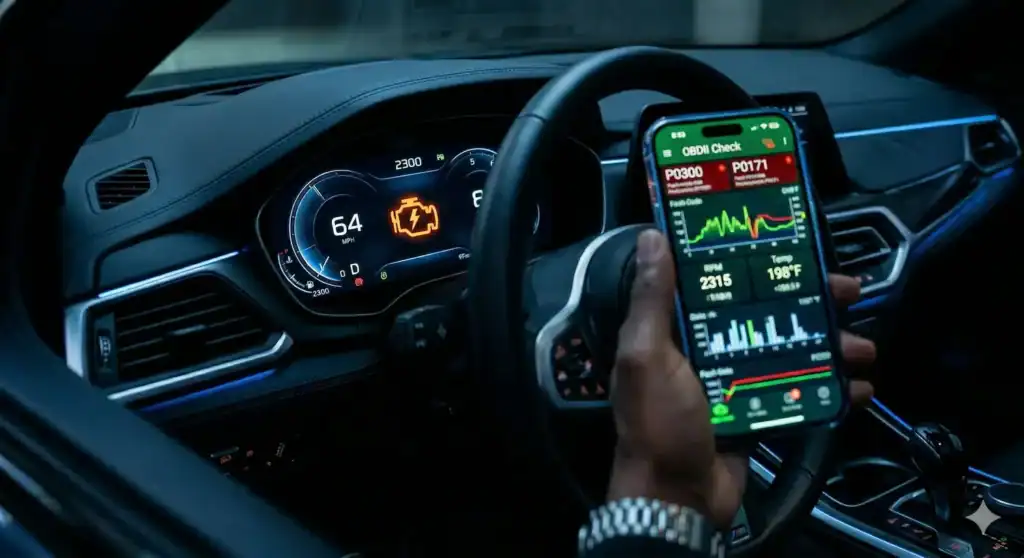
Check Engine Light On? What It Means and What You Should Do First

When the check engine light turns on, it can be stressful for drivers and car owners.

The good news is that it’s not always urgent or critical. This warning light can turn on for many reasons — some minor, others more serious.

Understanding what your car is trying to tell you and knowing what to do next can save you time, stress, and unnecessary repairs.

In this guide, we’ll explain everything step by step, using simple terms any driver can understand.

In most cases, this warning light does not mean immediate danger, but it should always be understood before continuing to drive.


What Does the Check Engine Light Mean?

Modern cars have a computer that constantly monitors how the engine is running.

When something doesn’t work as expected, the system:

  • Detects the issue
  • Stores an error code
  • Turns on the check engine light

The light doesn’t tell you exactly  what’s wrong — it simply warns you that the car needs attention.


Solid vs Blinking Check Engine Light (Very Important)

If your check engine light is on, diagnosing the cause early helps you make the right decision. Not all check engine lights mean the same thing.

Solid Check Engine Light

  • Usually means a non-urgent issue
  • The car often still drives normally
  • You can usually drive short distances safely

Blinking Check Engine Light

  • Indicates a serious problem
  • Continuing to drive may damage the engine
  • You should stop driving as soon as it’s safe

If the light is blinking, do not ignore it.


Common Reasons the Check Engine Light Comes On

Many causes are simpler than people expect.

  • Some common ones include:
  • Loose or damaged gas cap
  • Sensor issues (oxygen sensor, airflow sensor)
  • Worn spark plugs or ignition components
  • Emissions system problems
  • Fuel system irregularities

Some of these are inexpensive fixes. Others require professional attention — but panic is rarely helpful.


Is It Safe to Drive with the Check Engine Light On?

It depends on how the car behaves.

You can usually keep driving if:

  • The light is solid
  • The car feels normal
  • There are no strange noises, smoke, or strong smells

You should stop driving if:

  • The light is blinking
  • The engine is shaking or misfiring
  • Power is reduced
  • You notice smoke or overheating

When in doubt, reduce driving and investigate as soon as possible.


What You Should Do Next (Step by Step)

Instead of guessing, follow these steps calmly:

  1. Check if the light is solid or blinking
    Blinking means urgent.
  2. Tighten the gas cap
    A loose cap is a surprisingly common cause.
  3. Pay attention to how the car feels
    Note any changes in sound, power, or fuel consumption.
  4. Identify the stored error code
    The car’s computer keeps information about what triggered the light.

This information helps you decide whether the issue is minor or needs immediate attention.


How an OBD2 Scanner Can Help

An OBD2 scanner is a small tool that reads the error codes stored in the car’s computer.

For beginners, it can:

  • Show the reason the light turned on
  • Help you understand the issue before visiting a mechanic
  • Prevent unnecessary repairs

Using one does not fix the problem by itself, but it provides useful information to make better decisions.

For beginners, a simple OBD2 scanner is often enough to understand what the light means before deciding what to do next.


When You Should Go to a Mechanic

Some situations are best handled by a professional, such as:

  • Blinking check engine light
  • Engine misfires
  • Persistent warning lights after basic checks
  • Problems affecting safety or emissions

Even then, understanding the issue beforehand can save time and reduce confusion.


Frequently Asked Questions

Can the check engine light turn off by itself?

Yes. If the issue was temporary, the system may clear it after a few driving cycles.

Does disconnecting the battery fix the problem?

It may reset the light, but it does not fix the underlying issue.

Will my car fail inspection with the light on?

In many regions, yes. An active check engine light often causes inspection failure.

Is it expensive to diagnose a check engine light?

Costs vary, but identifying the problem early often reduces repair costs.

Can I drive with the check engine light on? 

Yes, if the light is solid and the car feels normal, you can usually drive short distances. A blinking light means you should stop driving.

What is the most common cause of a check engine light?

A loose gas cap is one of the most common and simplest causes.

Should I ignore the check engine light?

No. Even if the car feels normal, the light should be diagnosed to avoid future problems.

Do I need a mechanic immediately?

Not always. Many issues can be identified first using basic diagnosis.

When the check engine light turns on, it can be stressful for drivers and car owners.

The good news is that it’s not always urgent or critical. This warning light can turn on for many reasons — some minor, others more serious.

Understanding what your car is trying to tell you and knowing what to do next can save you time, stress, and unnecessary repairs.

In this guide, we’ll explain everything step by step, using simple terms any driver can understand.

In most cases, this warning light does not mean immediate danger, but it should always be understood before continuing to drive.


What Does the Check Engine Light Mean?

Modern cars have a computer that constantly monitors how the engine is running.

When something doesn’t work as expected, the system:

  • Detects the issue
  • Stores an error code
  • Turns on the check engine light

The light doesn’t tell you exactly  what’s wrong — it simply warns you that the car needs attention.


Solid vs Blinking Check Engine Light (Very Important)

If your check engine light is on, diagnosing the cause early helps you make the right decision. Not all check engine lights mean the same thing.

Solid Check Engine Light

  • Usually means a non-urgent issue
  • The car often still drives normally
  • You can usually drive short distances safely

Blinking Check Engine Light

  • Indicates a serious problem
  • Continuing to drive may damage the engine
  • You should stop driving as soon as it’s safe

If the light is blinking, do not ignore it.


Common Reasons the Check Engine Light Comes On

Many causes are simpler than people expect.

  • Some common ones include:
  • Loose or damaged gas cap
  • Sensor issues (oxygen sensor, airflow sensor)
  • Worn spark plugs or ignition components
  • Emissions system problems
  • Fuel system irregularities

Some of these are inexpensive fixes. Others require professional attention — but panic is rarely helpful.


Is It Safe to Drive with the Check Engine Light On?

It depends on how the car behaves.

You can usually keep driving if:

  • The light is solid
  • The car feels normal
  • There are no strange noises, smoke, or strong smells

You should stop driving if:

  • The light is blinking
  • The engine is shaking or misfiring
  • Power is reduced
  • You notice smoke or overheating

When in doubt, reduce driving and investigate as soon as possible.


What You Should Do Next (Step by Step)

Instead of guessing, follow these steps calmly:

  1. Check if the light is solid or blinking
    Blinking means urgent.
  2. Tighten the gas cap
    A loose cap is a surprisingly common cause.
  3. Pay attention to how the car feels
    Note any changes in sound, power, or fuel consumption.
  4. Identify the stored error code
    The car’s computer keeps information about what triggered the light.

This information helps you decide whether the issue is minor or needs immediate attention.


How an OBD2 Scanner Can Help

An OBD2 scanner is a small tool that reads the error codes stored in the car’s computer.

For beginners, it can:

  • Show the reason the light turned on
  • Help you understand the issue before visiting a mechanic
  • Prevent unnecessary repairs

Using one does not fix the problem by itself, but it provides useful information to make better decisions.

For beginners, a simple OBD2 scanner is often enough to understand what the light means before deciding what to do next.


When You Should Go to a Mechanic

Some situations are best handled by a professional, such as:

  • Blinking check engine light
  • Engine misfires
  • Persistent warning lights after basic checks
  • Problems affecting safety or emissions

Even then, understanding the issue beforehand can save time and reduce confusion.


Frequently Asked Questions

Can the check engine light turn off by itself?

Yes. If the issue was temporary, the system may clear it after a few driving cycles.

Does disconnecting the battery fix the problem?

It may reset the light, but it does not fix the underlying issue.

Will my car fail inspection with the light on?

In many regions, yes. An active check engine light often causes inspection failure.

Is it expensive to diagnose a check engine light?

Costs vary, but identifying the problem early often reduces repair costs.

Can I drive with the check engine light on? 

Yes, if the light is solid and the car feels normal, you can usually drive short distances. A blinking light means you should stop driving.

What is the most common cause of a check engine light?

A loose gas cap is one of the most common and simplest causes.

Should I ignore the check engine light?

No. Even if the car feels normal, the light should be diagnosed to avoid future problems.

Do I need a mechanic immediately?

Not always. Many issues can be identified first using basic diagnosis.

Many of these issues can be identified at home using simple diagnostic tools before deciding whether professional help is needed.


Key Takeaways

A check engine light is a warning, not a verdict.

Most problems become easier to manage when you:

  • Stay calm
  • Understand the basics
  • Diagnose before deciding

Understanding the error code can help you decide what to do next. A beginner OBD2 scanner can make this much easier.

If you want to go further and understand how to identify car issues beyond warning lights, learning how to diagnose car problems at home can help you decide your next steps more confidently.


Key Takeaways

A check engine light is a warning, not a verdict.

Most problems become easier to manage when you:

  • Stay calm
  • Understand the basics
  • Diagnose before deciding

Understanding the error code can help you decide what to do next. A beginner OBD2 scanner can make this much easier.

If you want to go further and understand how to identify car issues beyond warning lights, learning how to diagnose car problems at home can help you decide your next steps more confidently.

Leave a Comment

Your email address will not be published. Required fields are marked *

Scroll to Top