
Key Takeaways:
- A solid light usually indicates a non-urgent sensor issue, while a blinking check engine light signals a severe misfire that requires stopping immediately.
- Performing a DIY diagnostic with a $50–$100 OBD2 scanner can save you over $100 in mechanic “hook-up” fees and identify causes like a loose gas cap or faulty oxygen sensor.
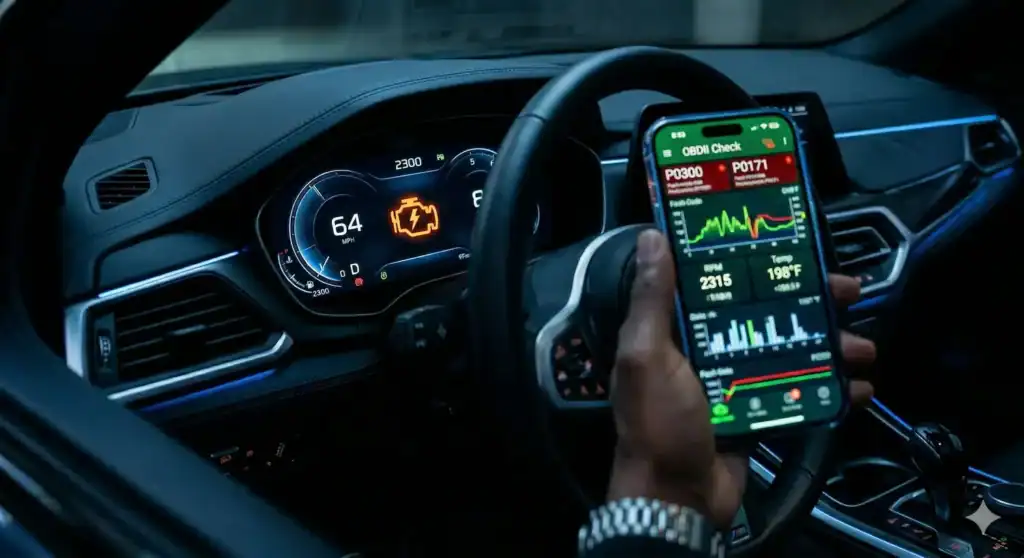
The “Quick Answer” Box
If your check engine light is solid, your car has detected a performance or emissions issue that needs attention soon, but you can typically continue driving if performance feels normal. If the light is blinking, stop driving immediately to prevent catastrophic engine and catalytic converter damage.
What Does the Check Engine Light Mean?
Modern vehicles use an onboard computer to continuously monitor engine performance and emissions. When the system detects a reading outside normal parameters, it performs three actions:
- Identifies the specific malfunction.
- Stores a Diagnostic Trouble Code (DTC) in its memory.
- Illuminates the warning light to alert the driver.
At CarLogicLab, we view this light not as a “disaster signal,” but as a smart diagnostic starting point that tells you exactly where to look.
Solid vs Blinking Check Engine Light (Urgency Levels)
The behavior of the light determines your immediate next steps:
| Light Status | Urgency Level | Meaning | Action Required |
|---|---|---|---|
| Solid ⚠️ | Warning | Non-urgent sensor or emissions issue. | Schedule a diagnostic soon; avoid long trips. |
| Blinking 🚨 | Emergency | Active engine misfire dumping raw fuel into exhaust. | Stop driving immediately to save your catalytic converter. |
| Intermittent✅ | Minor | Temporary fault or “ghost” code. | Check gas cap; scan for “pending” codes. |
Exporter vers Sheets
7 Most Common Check Engine Light Causes
Understanding these causes can help you manage the “Tool Gap”—the difference between a $20 DIY fix and a $400 mechanic bill.
1. Loose or Damaged Gas Cap ✅
Severity: Low | Estimated Cost: $0–$30 A loose cap allows fuel vapors to leak, triggering the EVAP system alert.
- Pro Tip: Always check this first after refueling!
2. Oxygen (O2) Sensor Failure ⚠️
Severity: Moderate | Estimated Cost: $150–$400 These sensors monitor fuel-to-air ratios. Ignoring a bad O2 sensor can drop your fuel economy by 40%.
3. Worn Spark Plugs or Ignition Coils ⚠️
Severity: Moderate | Estimated Cost: $100–$600 Faulty ignition components are a primary cause of the blinking check engine light.
- Related Guide: [Placeholder: Spark Plug Replacement Guide]
4. Catalytic Converter Problems 🚨
Severity: High | Estimated Cost: $800–$2,500 Usually caused by ignoring smaller issues like bad spark plugs. Symptoms include a “rotten egg” smell and extreme power loss.
- Related Guide: [Placeholder: Catalytic Converter Symptoms]
5. Mass Airflow Sensor (MAF) Failure ⚠️
Severity: Moderate | Estimated Cost: $150–$450 The MAF measures air entering the engine. Failure often leads to stalling or rough idling.
6. EVAP System Leaks ⚠️
Severity: Low to Moderate | Estimated Cost: $50–$300 Commonly caused by cracked hoses or a faulty purge valve.
7. Fuel System Issues ⚠️
Severity: Moderate to High | Estimated Cost: $200–$1,000+ Includes failing fuel injectors or a weak fuel pump, often causing the car to lose power while driving.
DIY Diagnostic Guide: Save $100 Before Visiting a Mechanic
Don’t pay a professional $100+ just to tell you your gas cap is loose. Follow these CarLogicLab-approved steps:
Step 1: Tighten the Gas Cap Ensure it clicks. If the light was caused by this, it may take 2-3 “drive cycles” to turn off.
Step 2: Use an OBD2 Scanner Every car owner should own a basic scanner.
- The Benefit: A $50 scanner pays for itself the very first time you use it by identifying the exact P-code (like P0300).
- Related Guide: [Placeholder: P0300 Diagnostic Guide]
Step 3: Evaluate Driveability Is the car shaking while driving? Or does the car start then die immediately? Note these symptoms for your diagnostic report.
Recommended Tools for Smart Car Owners
To truly “own” your vehicle’s health, we recommend these top-rated diagnostic tools:
- The Best Value: BlueDriver Bluetooth Professional OBDII Scan Tool – Connects to your phone and provides a list of verified fixes for your specific code.
- The Pro-Summer Choice: Autel MaxiLink ML619 – Great for reading both engine codes and more complex ABS/Airbag issues.
Frequently Asked Questions
Can I drive with the check engine light on?
Yes, if the light is solid and the car feels normal. However, you will likely fail emissions inspections.
Will disconnecting the battery reset the light?
It might clear the light temporarily, but the onboard computer will re-trigger the code as soon as the sensor detects the fault again.
Does the light mean my engine is about to explode?
Rarely. It is usually an emissions-related fault, but a blinking light does indicate a risk of severe internal damage.
Confused by a specific code? Check out our Top 5 Car Diagnostic Scanners to find the tool that translates those “P-codes” into plain English.