
Key Takeaways:
- Your tires are the “footprints” of your vehicle; their wear patterns reveal hidden issues with your alignment, air pressure, and suspension components.
- Cupping or scalloping is a major red flag for failing shocks or struts, while edge wear typically points to incorrect inflation or alignment.
- Upgrading from the “Penny Test” to a Digital Tread Depth Gauge is the only way to catch “sawtooth” patterns before they cause a permanent highway shake.
The “Tire Tread Diary”: What Your Footprints Say
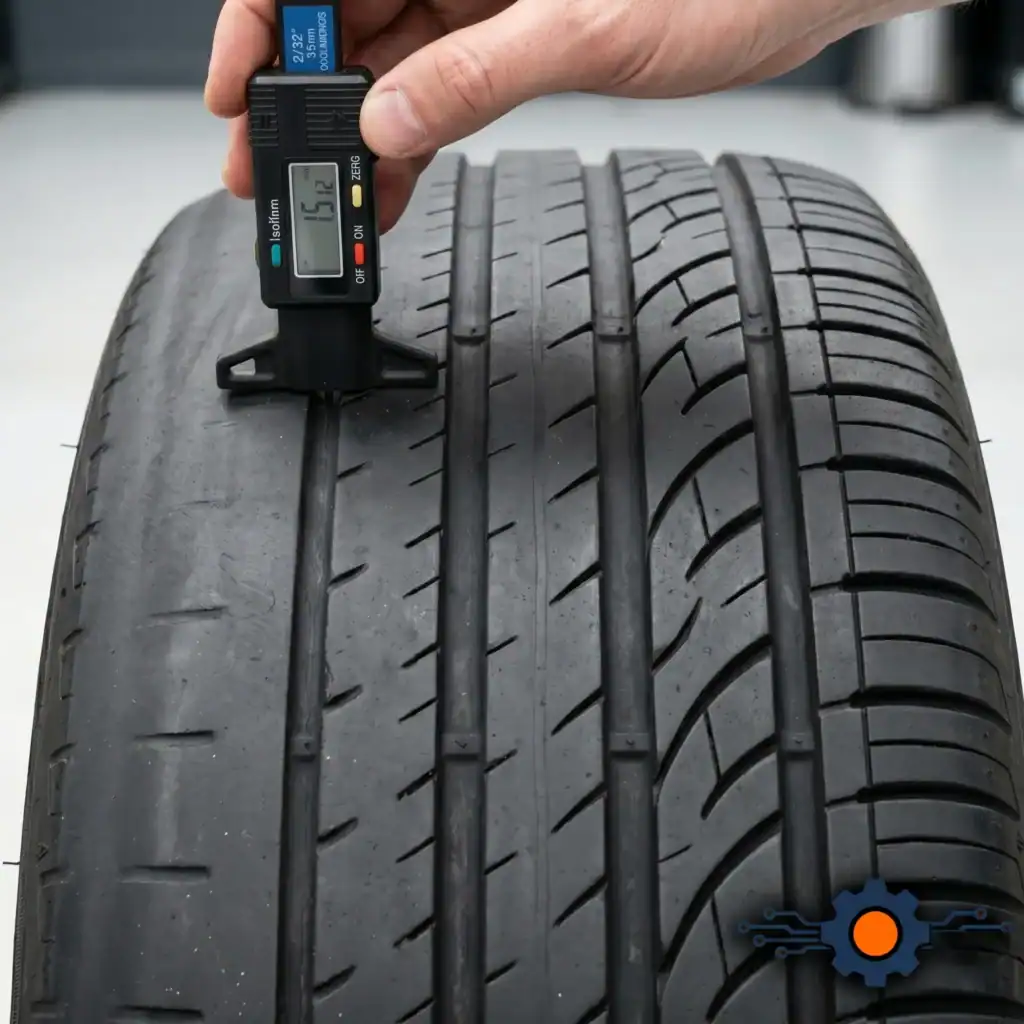
As a chassis engineer, I view tires as more than just rubber; they are a diagnostic diary. Every mile you drive, the road “records” the health of your car onto the tread. If your suspension is soft, the road carves a specific pattern. If your alignment is “duck-footed,” the road leaves a different mark.
Ignoring these patterns doesn’t just shorten the life of your tires—it leaves you blind to mechanical failures that can compromise your safety. By learning to read these footprints, you can identify a $100 alignment issue before it turns into a $1,200 tire and suspension overhaul.
Wear Patterns & Their Hidden Causes
1. Inner or Outer Edge Wear (The Alignment Alert) ⚠️
The Look: One side of the tire tread is significantly more worn than the other.
- The Cause: This is almost always an Alignment/Toe issue. If the tires are pointing too far inward or outward, the road literally “drags” one edge of the tire sideways.
- The Risk: This creates excessive heat and can lead to a sidewall blowout.
2. Center Wear (Over-Inflation) ✅
The Look: The middle of the tread is bald, while the edges still have depth.
- The Cause: Your tire pressure is too high. When over-inflated, the tire “balloons” out, forcing the center to take the brunt of the vehicle’s weight and friction.
3. Edge Wear on Both Sides (Under-Inflation) ⚠️
The Look: The inner and outer edges are worn, but the center still has plenty of tread.
- The Cause: Under-inflation. A soft tire collapses in the middle, pushing the weight to the outer shoulders. This generates massive heat and ruins your fuel economy.
4. Cupping or Scalloping (The Suspension Red Flag) 🚨
The Look: Divots or “dips” scooped out of the tread. It looks like someone used an ice cream scoop on your tire.
- The Cause: Bad shocks or struts. When your suspension can no longer keep the tire firmly pressed against the road, the tire “bounces” as you drive. Each time it hits the ground, it rubs off a patch of rubber.
- Related Guide: See our [Steering & Suspension Diagnostic Board] for more on failing struts.
The “Penny Test” vs. The Digital Depth Gauge
For decades, drivers have used the “Penny Test” (placing Lincoln’s head into the tread). If you can see the top of his head, your tires are bald.
Why the Penny Test Fails in 2026:
The penny test only measures depth; it doesn’t measure uniformity. To catch the “sawtooth” patterns (feathering) that cause the steering wheel to shake at high speeds, you need precision.
The CarLogicLab Standard:
We recommend a Digital Tread Depth Gauge. This tool allows you to measure the inner, center, and outer ribs of the tire. If there is a difference of more than 2/32″ between any of these points, your “Diary” is telling you that an alignment is mandatory.
Summary Diagnostic Table
| Wear Pattern | Primary Cause | Severity |
| One Edge Only | Bad Alignment (Toe/Camber) | Moderate ⚠️ |
| Center Only | Over-Inflation | Low ✅ |
| Both Edges | Under-Inflation | Moderate ⚠️ |
| Cupping / Dips | Worn Shocks/Struts | High 🚨 |
| Sawtooth / Jagged | Alignment Feathering | Moderate ⚠️ |
Next Steps: Restoring the Balance
If your “Tire Diary” revealed cupping or sawtooth patterns, your car likely has a high-speed vibration.
- Fix the Shake: Read our guide on Steering Wheel Shakes at High Speeds: Is It Balancing or Alignment? to decide your next move.
- Check the System: Uneven tire wear can sometimes be linked to shaking while braking, indicating warped rotors or loose suspension bushings.
- Deep Dive: If you’re seeing a dashboard warning alongside your tire issues, return to the Check Engine Light On? 7 Causes, What It Means & What To Do hub.